Why Nordic Exporters Need German Translation Services.
03 May, 2026· Article by Maria Jones

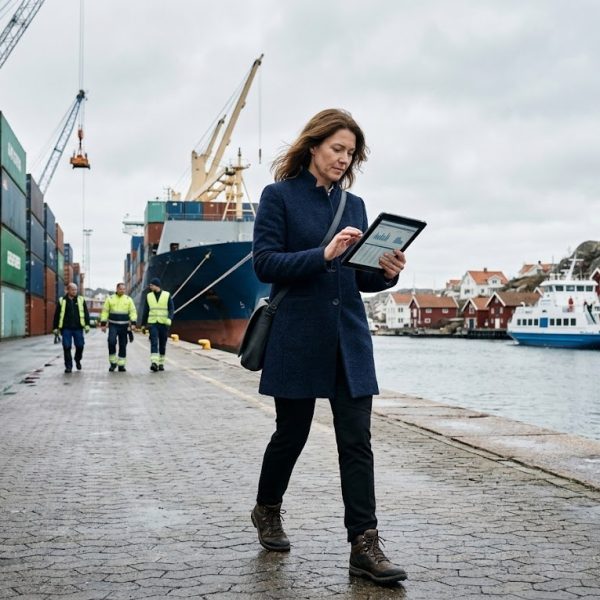
For Swedish, Danish, Norwegian and Finnish companies, Germany is rarely just another export market. It is usually the biggest one. German buyers are demanding, detail-oriented and loyal once trust is built. They also expect to read about your product, your terms and your safety data in German.
Many Nordic firms rely on English for too long, and German customers notice. English works for a first meeting. It does not work for a product catalog, a tender response or a service contract that a German purchasing department must approve. Here is why professional German translation services matter and how to use them well.
German Buyers Read the Fine Print
German business culture values precision. Technical specifications, delivery terms, warranties and certificates are read carefully and compared line by line against competitors. A vague or awkward translation creates doubt about the product itself. A clear, correct German text signals that you take the market seriously.
In regulated sectors such as machinery, medical devices, food and chemicals, German-language documentation is often a legal requirement rather than a courtesy. Operating manuals, labels and safety data sheets must be available in the language of the country where the product is sold.
Formal, Precise and Long
German has a reputation for long compound words, and it deserves it. A Swedish or English sentence frequently becomes longer in German, which affects layouts, packaging and interface design. German also distinguishes carefully between formal and informal address. Most B2B communication uses the formal "Sie," and switching to "du" too early can feel presumptuous, even if Nordic workplace culture is famously informal.
A good translator navigates these differences so that your brand sounds confident and professional rather than stiff or overly casual.
Germany, Austria and Switzerland Are Not Identical
German is spoken across Germany, Austria, Switzerland, Liechtenstein and parts of Italy and Belgium. Vocabulary and spelling vary. Swiss German writing, for example, does not use the letter ß. Legal and administrative terms differ between countries. If you are targeting more than one of these markets, tell your translation provider so the text can be adapted where needed.
The Reverse Direction Matters Too
Nordic companies also receive a steady flow of German documents: supplier contracts, tender specifications, test reports and correspondence with authorities. German to English translation services help teams in Stockholm or Helsinki understand exactly what they are agreeing to. Because many Nordic firms use English as their internal working language, translating German documents into English is often more practical than translating into each Nordic language separately.
When Certification Is Required
Company registration documents, powers of attorney, court papers and personal records for employees relocating to Germany often need a certified translation. Certified German translation services provide a translation accompanied by a signed statement or, where German authorities require it, a translation by a sworn translator. Always check what the receiving authority expects before ordering.
Keeping Terminology Consistent
If you sell technical products, the same terms appear in brochures, manuals, spare parts lists and support articles. Using different German words for the same component confuses customers and service technicians. Professional translators use translation memory software to store approved terminology and reuse it across every document, which also lowers costs for updates and new editions.
Learning a Bit of German Helps
Translation handles the documents, but relationships are built by people. Many Nordic managers find that even basic German opens doors in meetings and trade fairs. The Goethe-Institut offers courses and cultural resources for professionals who want to understand the market better. A few sentences of German in a meeting often earns more goodwill than a perfect slide deck in English.
Multilingual Growth Beyond Germany
Germany is often the first step toward wider European expansion. Companies that succeed there frequently move into Central and Eastern Europe next. Poland, the Czech Republic and Ukraine are growing trade partners for the Nordic region, and an English Ukrainian translation provider can fit into the same workflow you built for German.
What a Good Provider Offers
- Native German linguists with subject expertise in your industry
- A review step by a second linguist for published or legal content
- Adaptation for Germany, Austria or Switzerland as required
- Certified translations for official documents
- Translation memory and glossaries that you own and can reuse
The German translation services at PoliLingua cover commercial, technical, legal and certified work in both directions, with native linguists matched to each project's subject.
Budgeting Realistically
German translation is typically priced per word, with discounts for repeated content stored in translation memory. Certified documents may be priced per page or per document. Rush jobs cost more, so planning translation into your product and marketing timelines saves money. It also avoids the classic situation where a trade fair brochure is translated overnight and printed with errors that stay on the stand for three days.
The Bottom Line
For Nordic exporters, Germany rewards preparation. Investing in accurate, well-adapted German content tells buyers you intend to stay, and in a market that values reliability, that message is worth a great deal.
Recent Posts

Perché La Traduzione Finanzia...

Por Qué La Interpretación Ne...
Why Nordic Deals Need Skilled ...

How Nordic Firms Track Transla...
Skandinavische Übersetzungen ...